Affiliate Disclosure: I am an independent Youngevity distributor. This site is not owned or operated by Youngevity International. Some links on this page lead to products available through my personal Youngevity store, and I may earn a commission on qualifying purchases. This does not affect the price you pay.
When Your Gut Can't Hold On: How Food Sensitivities May Be Blocking Your Body's Ability to Absorb Minerals
February 2026 | Health & Wellness
Have you ever done everything "right" — taken your supplements, eaten your vegetables, tried to stay healthy — and still felt like something was missing?
You're tired when you shouldn't be. Your sleep is off. Your digestion never quite settles. And no matter what you try, you can't seem to get ahead of it.
If that sounds familiar, you're not alone. And according to two practitioners whose work has helped thousands of people find answers, the problem might not be what you're taking — it might be what your gut is unable to absorb.
A Tale of Two Problems That Often Travel Together
Dr. Joel Wallach, a naturopathic physician and researcher, has spent decades teaching that the human body requires 90 essential nutrients — 60 minerals, 16 vitamins, 12 amino acids, and 2-3 essential fatty acids — to function and heal properly.
His core message is simple but profound: when the body is missing these raw materials, it cannot repair itself. Deficiency, in his view, is at the root of most chronic health struggles.
Dr. Amy Myers, a functional medicine physician and author of The Autoimmune Solution, approaches health from a different but complementary angle. She has written extensively about how the foods we eat — particularly gluten and other common irritants — can damage the lining of the gut, creating what she calls "leaky gut," or intestinal permeability.
What these two practitioners agree on, each in their own way, is this: a damaged gut cannot absorb nutrients properly, no matter how many you consume.
The Gut as a Gateway
Think of your small intestine as a fine-mesh screen door.
Its job is to let the good stuff in — nutrients, minerals, vitamins — while keeping harmful particles out. The lining of your intestine is covered in tiny finger-like projections called villi, and these villi are responsible for absorbing the minerals your body needs.
When everything is working well, minerals like magnesium, zinc, calcium, and iron pass through that screen and enter your bloodstream, where they can do their work.
But according to Dr. Myers, when you repeatedly eat foods your body reacts to — especially gluten — the gut lining can become inflamed and damaged. The villi flatten out. The "screen" develops holes. And suddenly, the system that was designed to nourish you starts to break down.
Dr. Wallach describes this process in his own terms, teaching that gut irritation from certain foods — what he calls "nutritional landmines" — directly interferes with the body's ability to absorb the minerals it needs to heal.
Gluten: The Gut's Most Common Irritant
Of all the foods that practitioners like Dr. Myers and Dr. Wallach point to as potential gut irritants, gluten is at the top of the list.
Gluten is a protein found in wheat, barley, rye, and oats. For people with celiac disease, it triggers a severe immune response that directly destroys the intestinal lining. But Dr. Myers argues that even people without a celiac diagnosis can experience a milder form of gut irritation from gluten — a condition often called non-celiac gluten sensitivity.
The result, in her view, is chronic low-grade inflammation in the gut that quietly erodes the body's ability to absorb nutrients over time.
You may not feel a dramatic reaction. You might just feel... off. Tired. Foggy. Bloated. Achy. And slowly, over months and years, the mineral deficiencies that Dr. Wallach warns about begin to take hold.
The Mineral Deficiency Spiral
Here is where the two problems begin to reinforce each other.
When the gut is inflamed and absorption is compromised, the minerals that support gut healing — zinc, magnesium, vitamin D, and others — are the very ones the body can't absorb well.
Zinc, for example, is essential for repairing the intestinal lining. But if the gut is too damaged to absorb zinc properly, the lining can't heal. And if the lining can't heal, zinc absorption stays poor.
It becomes a cycle.
Dr. Wallach teaches that this is why simply taking supplements isn't always enough. If the gut is inflamed and the absorption pathways are compromised, the body may not be able to use what you're giving it. The first step, in his view, is addressing the foods that are causing the irritation.
Dr. Myers agrees, and her clinical approach consistently begins with an elimination diet — removing the most common food triggers and giving the gut a chance to calm down and begin healing.
What Is an Elimination Diet, and Could It Help You?
An elimination diet is not a punishment. It's an experiment.
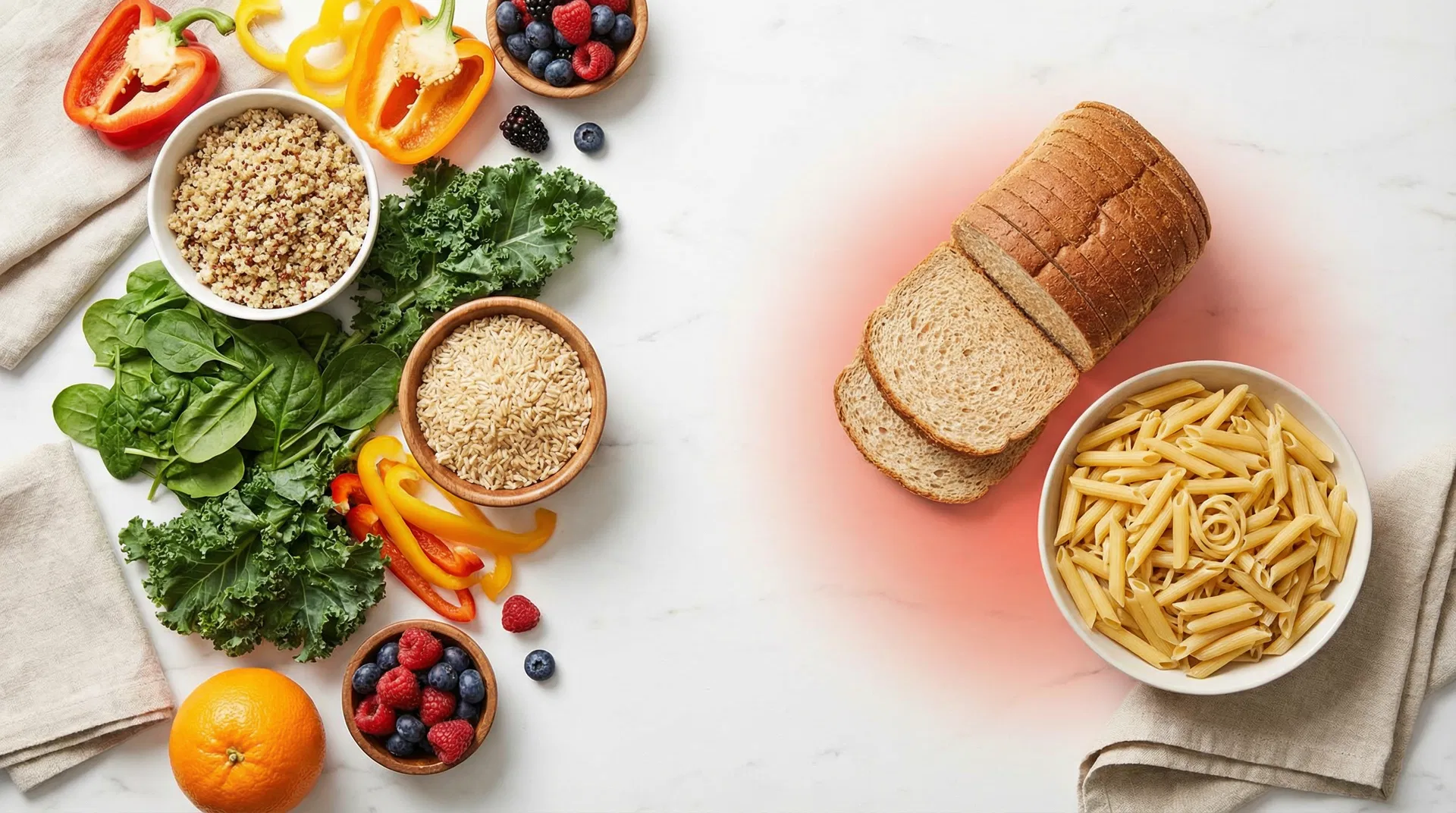
The idea is simple: you temporarily remove the foods most commonly associated with gut irritation — gluten, dairy, soy, corn, eggs, and processed sugars — for a period of three to four weeks. Then you reintroduce them one at a time, watching carefully for symptoms.
It's one of the most powerful tools in functional medicine precisely because it doesn't require a lab test or a prescription. It requires only attention — to your body, your symptoms, and the patterns that emerge.
Many people are surprised by what they discover. A food they've eaten their whole life turns out to be the source of the fatigue they've lived with for years. A simple dietary change brings a clarity they hadn't felt in decades.
Here are a few practical steps to get started:
Keep a food and symptom journal. Before you change anything, spend one week writing down what you eat and how you feel afterward. Look for patterns — bloating after certain meals, fatigue after certain foods, changes in mood or energy.
Start with gluten. If you're not ready for a full elimination diet, Dr. Myers often recommends starting with gluten alone. Remove it completely for 30 days and pay close attention to how you feel.
Focus on whole foods. During an elimination, the simplest approach is to eat foods that don't have ingredient lists — vegetables, fruits, quality proteins, healthy fats, and plenty of water.
Be patient. Gut healing takes time. Most practitioners suggest giving the process at least three to four weeks before drawing conclusions.
Supporting the Gut as It Heals
Once the irritating foods are removed, the gut can begin to repair itself — but it needs the right raw materials to do so.
This is where Dr. Wallach's 90 essential nutrients become especially relevant.
Zinc supports the regeneration of intestinal cells. Magnesium calms inflammation and supports hundreds of enzymatic processes. Vitamin D plays a critical role in immune regulation and gut barrier integrity. Selenium, copper, and manganese all contribute to the antioxidant systems that protect the gut lining from further damage.
The Healthy Body Start Pak from Youngevity was designed with this philosophy in mind — providing all 90 essential nutrients in bioavailable forms that the body can use as it works to restore balance.
Beyond Osteo-fx provides calcium, magnesium, and the cofactors needed for bone and connective tissue repair. Ultimate Gluco-Gel supports the collagen structures that form the gut lining itself.
The goal is not to take more supplements and hope for the best. The goal is to remove what's harming the gut, then give it everything it needs to heal.
You Don't Have to Figure This Out Alone
One of the most encouraging things about the approach shared by Dr. Wallach and Dr. Myers is that it puts real tools in your hands.
You don't have to wait for a diagnosis. You don't have to spend thousands on testing. You can start today — with a journal, a willingness to pay attention, and a commitment to giving your body what it needs.
If you've been struggling with digestive issues, chronic fatigue, brain fog, or unexplained symptoms for years, it may be worth asking a simple question: What if the foods I'm eating are getting in the way of the nutrients my body needs to heal?
That question, and the exploration that follows, has changed the lives of many people who felt stuck for a very long time.
A Natural Next Step
If you're curious about exploring food sensitivities, the Food Allergy Guide offers a free, evidence-based resource for understanding elimination diets and identifying food triggers — without expensive lab tests.
And if you'd like to learn more about the 90 essential nutrients and how comprehensive mineral supplementation supports the body's healing process, explore the resources at Mineral Wellness Guide.
These two approaches work together. Removing what harms the gut, and providing what heals it, is a powerful combination.
Practical Summary
| Step | What to Do | Why It Matters |
|---|---|---|
| Start a food journal | Track meals and symptoms for 1 week | Identify patterns before changing anything |
| Remove gluten first | Eliminate for 30 days, note changes | Gluten is the most common gut irritant |
| Try a full elimination | Remove top 6 irritants for 3-4 weeks | Gives the gut a chance to calm and heal |
| Reintroduce slowly | Add one food back every 3 days | Pinpoints specific triggers |
| Support with minerals | Add comprehensive mineral supplementation | Provides raw materials for gut repair |
| Be consistent | Give the process at least 30 days | Gut healing takes time |
This article is for educational purposes only and reflects the viewpoints of functional-medicine practitioners like Dr. Joel Wallach and Dr. Amy Myers. It is not medical advice. Consult a licensed healthcare professional before making personal health decisions.
References
- Myers, A. (2015). The Autoimmune Solution. HarperOne.
- Fasano, A. (2012). Leaky gut and autoimmune diseases. Clinical Reviews in Allergy & Immunology, 42(1), 71–78. https://pubmed.ncbi.nlm.nih.gov/22109896/
- Wallach, J. (2014). Dead Doctors Don't Lie. Legacy Communications.
- Sander, G.R., et al. (2005). Rapid disruption of intestinal barrier function by gliadin involves altered expression of apical junctional proteins. FEBS Letters, 579(21), 4851–4855. https://pubmed.ncbi.nlm.nih.gov/16099456/
- Prasad, A.S. (2013). Discovery of human zinc deficiency: its impact on human health and disease. Advances in Nutrition, 4(2), 176–190. https://pubmed.ncbi.nlm.nih.gov/23493534/
- Umar, S., & Sellin, J.H. (2001). Intestinal absorption and secretion. In Textbook of Gastroenterology. Blackwell Science.
Food sensitivities can trigger gut inflammation that interferes with how your body absorbs key minerals. FoodAllergyGuide.org offers a free, evidence-based guide to identifying food triggers through an elimination diet — no expensive lab tests required.
Explore FoodAllergyGuide.org →Ready to Experience the Benefits?
Explore our selection of premium nutritional supplements based on Dr. Wallach's 90 essential nutrients philosophy.
Disclaimer: The information in this article is for educational purposes only and is not intended to diagnose, treat, cure, or prevent any disease. Always consult with a qualified healthcare professional before making changes to your health regimen. As an independent Youngevity distributor, I may earn commissions from product sales.